![[...]](https://secure.gravatar.com/avatar/9cad33b85e99b552b548e6ddd6afed37ad443a048e65e6ca5580ba0bef491764?s=120&d=mm&r=g)
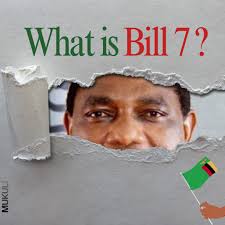
…Attorney General Mulilo Kabesha submits before the Constitutional Court that the Bill through Act No 13 of 2025 has been crystalised into law, cannot therefore be annulled, argues that the judgement of the court did not result into legal death of the then proposed legislation
By GRACE CHAILE
ATTORNEY General Mulilo Kabesha has told the Constitutional Court in unequivocal terms that Constitution (Amendment) Bill No. 7 of 2025 is beyond legal challenge, arguing that the Bill has already crystallised into law and now forms an integral part of the Constitution of Zambia under Article 79(5)(a).
Mr Kabesha, State Counsel, argued that the deferral of Bill 7 by the Minister of Justice Princess Kasune and the subsequent appointment of a Technical Committee by President Hakainde Hichilema were undertaken in full compliance with the judgement in Munir Zulu and Celestine Mukandila v Attorney General.
He contended that the Munir Zulu judgement did not result in the “legal death” of Bill No. 7 of 2025, as argued by Lusaka lawyer, Makebi Zulu.
According to Mr Kabesha, the court merely found that the initial consultative process was inadequate and did not declare the Bill a nullity nor impose a permanent or absolute bar on further legislative action, maintaining that any interpretation to the contrary only amounted to a misreading of the judgement.

“Attorney General avers that Bill 7 was duly assented into law by President (Hakainde) Hichilema, on December 18th, 2025, and thereby acquired full legal force and reads as The Constitution of Zambia (Amendment) Act, No. 13 of 2025.
Upon such assent, the said Bill became law and now forms part of the Constitution of Zambia, pursuant to Article 79(5)(a) of the Constitution,” he submitted.
Mr Kabesha therefore urged the court to dismiss the petition, arguing that it lacks merit and amounts to an abuse of court process.
Mr Zulu has petitioned the Constitutional Court, challenging the legality of the Constitution (Amendment) Bill No. 7 of 2025, claiming that the attempt to revive the bill was procedurally flawed and unconstitutional.
He has asked the court to declare the Bill 7 null and void and order that the amendment process be restarted afresh through genuine public consultation.
However, in its response, the State admitted that the Constitutional Court delivered judgement in Munir Zulu and Celestine Mukandila v Attorney General, and denied the petitioner’s construction of the ratio decidendi of that decision.
He maintained that the judgement addressed defects in the initiation process under consideration at the time but did not extinguish Parliament’s mandate or permanently bar subsequent constitutional reform.
He argued that the Technical Committee conducted public consultations, concluded its report, and submitted it to the President as scheduled.
Mr Kabesha argued that neither the Constitution nor the Munir Zulu judgement prescribes a minimum duration for public consultations, and that allegations of insufficient time are speculative and without merit.
He said parliamentary procedures, including referral of Bills to committees, fall within Parliament’s exclusive constitutional competence.
Mr Kabesha also denied allegations that Government acted in defiance of the court’s authority, stating that no factual or legal basis had been established to sustain claims of contempt.
He submitted that, by operation of Article 1(4) of the Constitution, the Constitution is supreme and cannot be challenged once enacted.
He argued that the petition has been overtaken by events, as Bill 7 has since crystallised into constitutional law, and prayed that the petition be dismissed with costs.