
In a landmark scientific achievement that is drawing global attention, Spanish researchers have successfully eliminated the most aggressive form of pancreatic cancer in laboratory mice, offering new hope against one of the deadliest cancers known to medicine.
The breakthrough was made by a team at Spain’s National Centre for Oncological Research (CNIO), led by veteran cancer scientist Dr. Mariano Barbacid. Using a triple-drug therapy, the researchers achieved complete tumour remission in animal models — something that has never been accomplished before for this type of cancer.
The findings were published in the highly respected scientific journal Proceedings of the National Academy of Sciences (PNAS).

Why Pancreatic Cancer Is So Deadly
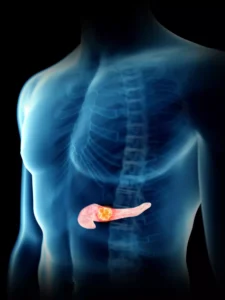
Pancreatic ductal adenocarcinoma (PDAC) is the most common and aggressive form of pancreatic cancer. It is often diagnosed late, spreads quickly, and is notorious for resisting treatment. Globally, fewer than 5 percent of patients survive beyond five years.

PDAC, has long been associated with extremely low survival rates. The disease is often detected late, spreads rapidly, and is notorious for developing resistance to standard therapies.
Single-drug treatments frequently fail because cancer cells quickly adapt, activating alternative survival pathways. This biological flexibility has made pancreatic cancer one of the most lethal forms of the disease, with limited therapeutic progress for decades.
In Spain, over 10,000 new cases are diagnosed each year. Across Africa, including Zambia, limited access to early diagnosis means many patients are identified when the disease is already advanced, leaving few effective treatment options.
A New Strategy: Attacking Cancer From Three Angles
Rather than relying on a single drug — a method that has repeatedly failed — the CNIO researchers designed a multi-targeted treatment that blocks cancer survival pathways simultaneously.
The therapy targets three key proteins that drive tumour growth and resistance:
KRAS, the main genetic driver of pancreatic cancer
EGFR, which supports tumour development
STAT3, which enables cancer cells to adapt and evade treatment
The drug combination includes:
Daraxonrasib (RMC-6236) — a KRAS inhibitor
Afatinib — an EGFR inhibitor already used in lung cancer treatment
SD36 — a compound that degrades STAT3
By shutting down these pathways at once, scientists prevented cancer cells from “rewiring” themselves — a major reason pancreatic cancer has remained untreatable for decades.
Extraordinary Results in the Laboratory
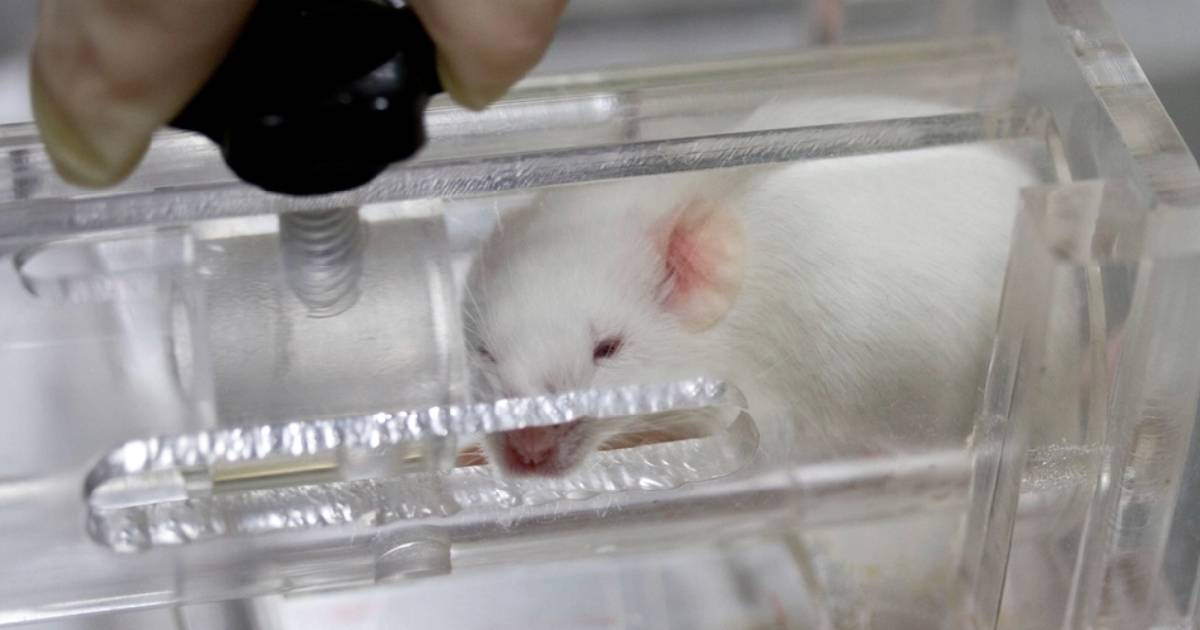
In experiments involving 18 mice implanted with human pancreatic cancer cells, 16 showed complete tumour elimination and remained cancer-free for more than 200 days, nearly half the lifespan of a mouse.
Equally significant, the treatment caused minimal side effects, an essential factor for any therapy being considered for use in humans.
The approach was effective across several advanced laboratory models, including:
Genetically engineered mice
Tumours implanted directly into the pancreas
Human patient-derived tumour xenografts (PDX)
Experts say such durable remission without relapse is extremely rare in pancreatic cancer research.
A Career-Defining Moment for Mariano Barbacid
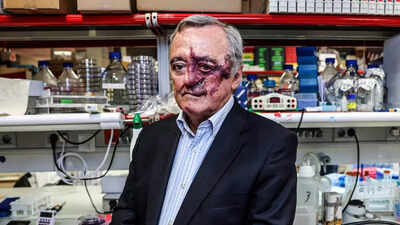
Dr. Barbacid, director of the Experimental Oncology Group at CNIO and honorary scientific president of the CRIS Against Cancer Foundation, described the findings as unprecedented.
“For decades, we have improved our molecular understanding of cancer,” he said. “But pancreatic cancer has remained one of the most resistant. This is the first time we have achieved complete remission in experimental models.”
Barbacid is internationally known for helping identify the first human oncogene in the 1980s — a discovery that transformed cancer research. His long-standing view that pancreatic cancer cannot be cured with a single drug is now strongly supported by this study.
What Happens Next
Despite optimistic headlines, researchers caution that this is not yet a cure for humans. Clinical trials are still required.
Next steps include:
Further safety testing
Studying effects on cancer spread (metastasis)
Identifying which patients would benefit most
Expanding studies to additional genetic models
Dr. Barbacid has also called on hospitals and laboratories worldwide to collaborate by providing patient samples to accelerate research.
A Ray of Hope
While human trials remain ahead, experts say the findings represent one of the most hopeful advances ever recorded for pancreatic cancer.
For countries like Zambia, where cancer care resources are limited and survival rates remain low, the study highlights the importance of sustained global research and collaboration in the fight against deadly diseases.
“This is not the end of the journey,” Barbacid said, “but it is a very big step forward.”